
A RING account is two products stitched together: a personal loan booked through an RBI-registered NBFC, and a UPI payment handle tied to the user's bank account. Both sides carry structured per-user records — a sanctioned amount, a net disbursed figure, an EMI calendar with an APR, a repayment trail, and a stream of UPI debits and credits. That is the material an integrator wants to read, normalize and keep in sync. The honest split is that some of it sits bank-side and is reachable through India's consent network, while the rest lives only in the authenticated app and is reached by analyzing the app's own traffic with the account holder's permission.
So the working plan here leans on the Account Aggregator pipe for everything the bank already holds, and on protocol analysis of the user's session for the loan timeline, UPI views and KYC status the app renders itself. Below is what each surface holds, how we reach it, and what lands in your hands at the end.
What the account actually holds
These rows map to surfaces visible in the app and described on the PayWithRing site, not a generic finance checklist.
| Data domain | Where it comes from in RING | Granularity | Use for an integrator |
|---|---|---|---|
| Loan ledger | Active and closed loans booked via partner NBFCs | Per loan: sanctioned, processing fee + GST, net disbursed, total repayment | Liability snapshot, debt-consolidation underwriting, statement reconciliation |
| EMI schedule | Repayment plan screen, 6–60 month tenures per the listing | Per instalment: due date, principal/interest split, APR (listing states 17%–45%*) | Cash-flow forecasting, due-date reminders, affordability checks |
| Repayment history | Past EMI payments and any foreclosure | Per payment: date, amount, status | Behavioural scoring, delinquency monitoring |
| UPI activity | PayWithRing UPI handle linked to the bank account | Per transaction: counterparty VPA, amount, timestamp, status | Spend categorization, income detection, payment recon |
| Bank account | Disbursal/repayment account, number + IFSC | Account-level identity and balance via AA | Account verification, mandate setup |
| KYC profile | PAN and Aadhaar-based onboarding | Verification status, masked identifiers | Identity match, onboarding reuse |
Routes to the data
Account Aggregator consent (bank and loan side)
India runs a consent-based data network under RBI's NBFC-AA Master Direction. A registered Financial Information User raises a consent request, the user approves it inside their chosen AA app, and the Financial Information Provider returns bank statements and loan account data. Reach: the disbursal account, balances, and the loan record as the lender reports it. Effort is moderate — the heavier work is the FIU registration and signing onto an AA, which we set up with you during onboarding. Durability is high because it is regulator-backed rather than dependent on an app screen.
Authorized protocol analysis (app-native side)
The in-app EMI timeline, the UPI transaction list and KYC status are rendered from RING's own backend over the authenticated session. We analyze that traffic against a consenting account, document the auth handshake and the JSON each endpoint returns, and rebuild it as a clean client. Reach: everything the user sees in-app. Effort is higher up front; durability needs a re-check when the app's front end shifts, which we plan for. This is the route that fills the gaps the AA pipe does not carry.
User-consented credential access
Where a one-off pull is enough — say a single applicant authorizing a snapshot of their RING obligations — a consented, time-boxed session against their own login produces the same records without standing infrastructure. Lighter to stand up, narrower in scope.
For most buyers the sensible build runs the consented AA feed as the dependable core for anything the bank holds, and adds protocol analysis on top to recover the loan timeline, UPI and KYC views that only exist in the app. We would not ship one without the other for a lending use case, because each leaves a real hole the other fills.
A sample of the work
Illustrative only — exact field names are confirmed against a live consenting session during the build, not asserted here as RING's published contract.
# Normalized loan + EMI read, after auth tokens are established
GET /v1/ring/loans?status=active
Authorization: Bearer <session_token>        # rotated per protocol report

200 OK
{
  "lender": "Si-Creva Capital Services",      # one of the partner NBFCs
  "loan_id": "RNG-********",
  "sanctioned": 60000,
  "processing_fee_incl_gst": 4248,
  "net_disbursed": 55752,
  "apr_pct": 44.0,
  "tenure_months": 18,
  "emi": [
    {"seq": 1, "due": "2026-07-05", "amount": 4271, "principal": 2621, "interest": 1650, "state": "due"}
  ],
  "total_repayment": 76858
}

# error path we handle explicitly
401 -> refresh via documented token chain; 429 -> backoff, respect rate ceiling
The figures above mirror the worked repayment example in RING's own Play Store description; treat them as a shape, not as your user's live balance.
What lands in your hands
Each deliverable is tied to a RING surface, not a generic menu:
- An OpenAPI 3 spec covering the loan, EMI, repayment, UPI and KYC reads, with a normalized schema keyed by lender NBFC.
- A protocol and auth-flow report: the session/token handshake, refresh chain, and the cookie or header set each endpoint needs.
- Runnable source for the key endpoints in Python and Node.js, including the AA consent-request stubs and the app-native client.
- Automated tests against recorded fixtures so a front-end change surfaces as a failing test, not a silent gap.
- Interface documentation an in-house team can maintain, plus data-retention and consent-logging guidance fitted to RBI's storage-in-India rule.
Consent and the rules that bind it
Two RBI regimes govern this. The Account Aggregator framework, set out in the NBFC-AA Master Direction, makes consent the gate: nothing moves without the user approving a specific, scoped, time-bound request, and that consent can be revoked. The Digital Lending Directions add the borrower-data conditions a lending app sits under — borrower data stored on infrastructure inside India, disbursal and repayment routed directly through the borrower's bank account, and reporting to credit information companies. We build to both: consent records and access logs kept, data minimized to the stated purpose, hosting in an Indian region, and an NDA in place where the engagement touches anything sensitive. The dependable legal basis for every pull is the account holder's own authorization, recorded and auditable.
Engineering judgments we carry
Two things about RING specifically that shape the build:
- RING originates through several RBI-registered NBFCs — Si-Creva Capital Services, Northern Arc, MAS Financial Services and Utkarsh Small Finance Bank, as the app lists its partners. One user can hold tranches under different lenders, each with its own APR, agreement and bureau line. We map per-lender plan rules into a single loan object so a borrower with two NBFC loans reads consistently rather than as two incompatible records.
- The loan side and the UPI side resolve to different backends — lending versus the NPCI rails behind the PayWithRing handle. We model them as separate sources with separate refresh cadences and join them on the user, rather than pretending one feed carries both, so a UPI outage does not stall the loan sync and vice versa.
Access to a consenting account or a sponsor sandbox is arranged with you during onboarding; the build runs against that, and a re-validation pass is part of maintenance for when the app's front end moves.
Keeping it current
AA-sourced data refreshes on the consent's agreed periodicity, so the bank and loan record stay current without re-prompting the user each time. The app-native client is the part exposed to front-end drift; our tests pin the response shapes, and the maintenance pass re-checks the auth chain and endpoints on a schedule rather than waiting for a break. EMI due dates and UPI postings are the time-sensitive fields, so those get the tightest sync.
What the interface shows
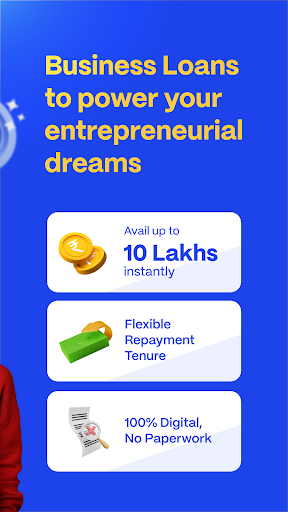
Screens from the public listing, used to confirm which surfaces exist before any integration work. Tap to enlarge.




Similar apps in the same lending space
If your integration needs to span more than RING, these neighbours hold comparable data and slot into one unified schema. Names are for ecosystem context, not ranking.
- KreditBee — flexi and personal loans, ₹6,000 to ₹10 lakh; loan ledger and repayment data much like RING's.
- Freo Money (formerly MoneyTap) — a credit line product, so its data is a revolving balance plus draw history.
- Fibe (formerly EarlySalary) — salary-advance and personal loans with EMI schedules and KYC.
- CASHe — short-tenure personal loans, repayment trails and an in-app score.
- Navi — personal loans plus a wider financial-services stack on one login.
- Branch — small-ticket instant loans with a behavioural data trail.
- moneyview — personal loans and a money-management view over linked accounts.
- True Balance — small loans and bill payments aimed at first-time borrowers.
- Bajaj Finserv — loans, EMI cards and a broad account holding richer per-user records.
How this was checked
Reviewed June 2026 against RING's Play Store listing and the PayWithRing site for the data surfaces and NBFC partners, RBI and government sources for the Account Aggregator framework, and the published Digital Lending guidelines for the borrower-data and disbursal conditions. Primary sources:
- RING (by Kissht) Play Store listing
- PayWithRing personal-loan FAQ
- Account Aggregator Framework — Dept. of Financial Services
- RBI Guidelines on Digital Lending
Mapping by the OpenBanking Studio integration desk, June 2026.
Questions an integrator asks
Which records inside RING can an integration actually reach?
The account holds the loan ledger (sanctioned amount, net disbursed, outstanding), the EMI schedule with due dates and APR, repayment history, the linked bank account and IFSC, the UPI handle and its transaction list, and the KYC bundle (PAN, Aadhaar-based verification). A consented pull through an Account Aggregator returns the bank-side statement and loan data; protocol analysis of the authenticated app session reaches the in-app EMI schedule and UPI views that the AA pipe does not carry.
RING reports to credit bureaus through several NBFCs — does that complicate the data model?
It does, and we account for it. RING originates loans through RBI-registered NBFCs such as Si-Creva Capital Services, Northern Arc, MAS Financial Services and Utkarsh Small Finance Bank, as the app describes its lending partners. A single user can carry tranches booked under different lenders, each with its own agreement, APR and bureau reporting line. We normalize those into one schema keyed by lender so an integrator sees a consistent loan object regardless of which NBFC funded it.
Is the RBI Account Aggregator route the right one for a lending app like this?
For the bank-account and loan-statement side, yes — the Account Aggregator framework run under RBI's NBFC-AA Master Direction is the consented, regulator-backed path, and the data sharer must be a registered Financial Information User. For the app-native surfaces (the UPI handle, the in-app EMI timeline, KYC status) we pair AA with authorized protocol analysis of the user's own session, because those views live in the app rather than in the AA data set.
Where does RING's data have to live, and how does that shape the build?
India. RBI's digital lending rules require borrower data to be stored on infrastructure inside the country, so we host the integration and any cached tokens in an Indian region and keep retention to what the use case needs. Consent records and access logs are kept so an audit can trace every pull back to a user authorization.
Getting it built
The price tracks the deliverable, not a retainer. Source-code delivery starts at $300 — you get the runnable client, the OpenAPI spec, tests and the interface docs for RING's loan, EMI, UPI and KYC surfaces, and you pay only after delivery once it works as described. If you would rather not run infrastructure, the pay-per-call hosted API has no upfront fee: you call our endpoints and pay for the calls you make. Either way a build runs in a one-to-two-week cycle. Tell us the app and what you need from its data — access and the compliance pieces are arranged with you as part of the work. Start at /contact.html.
App profile — RING (by Kissht): Instant Loan
RING, marketed as PayWithRing and powered by Kissht, is an Indian digital-lending and UPI app (package com.ideopay.user, per its Play Store listing). It offers personal loans from ₹5,000 to ₹5,00,000 with tenures of 6 to 60 months and an APR the listing states as 17%–45%*, disbursed after a fully digital PAN and KYC flow. Loans are originated through RBI-registered NBFCs including Si-Creva Capital Services, Northern Arc, MAS Financial Services and Utkarsh Small Finance Bank, as the app describes. Alongside lending it provides UPI payments via a linked bank account. The publisher's listed contact is care@pay-with-ring.com, with a registered office in Kurla (West), Mumbai. Figures here are drawn from the public listing and are not independently verified balances.